Private Blog Network in SEO: Definition and Risks
What Is a Private Blog Network?
A private blog network is a network of websites created solely to link to another site and influence organic search visibility. Google classifies this practice as a link scheme in its link schemes documentation. In SEO, the term usually refers to sites that exist for outbound linking rather than for independent audiences or original publishing. Ahrefs uses the same definition in its glossary, which matches this narrow use. The concept matters because search engines evaluate links for relevance and intent, not just quantity. In practice, this makes PBNs a policy issue, not a normal content strategy. Search Console can flag unnatural links, and Google provides a disavow tool for cleanup and reconsideration when links create a manual action or concern.
How Do PBN Links Work?
A private blog network works by sending links from satellite sites to one target page. Operators often buy expired domains, place them on separate hosting, and rebuild them with reused content. They then control anchor text so the links point to a chosen page and look less random to a reviewer or crawler. Ahrefs defines the term.
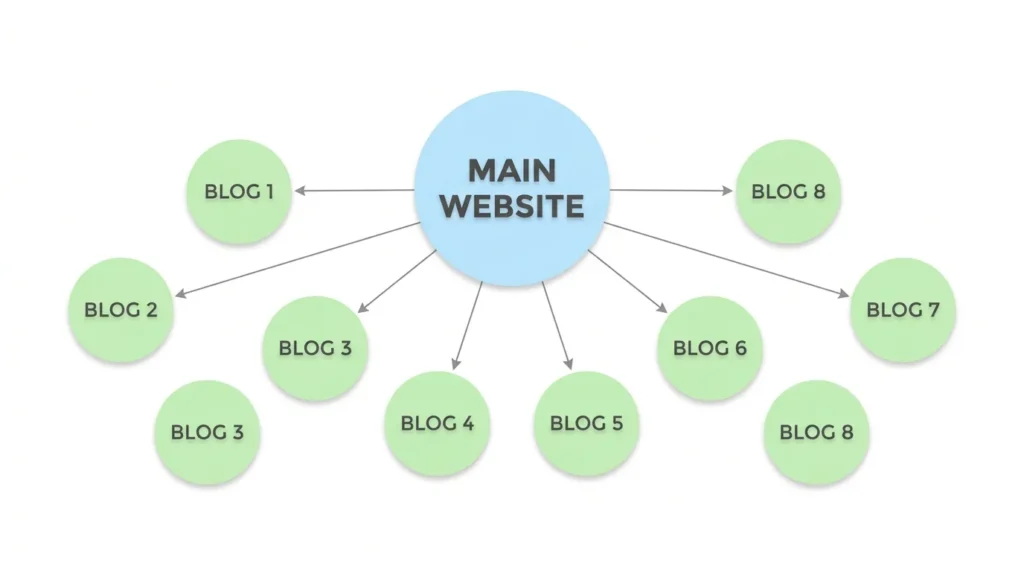
Google can connect those sites through shared IP ranges, WHOIS data, templates, plugins, and repeated outbound link patterns. That structure can leave fingerprints even when the domains change. For the policy view, Google’s link schemes guidance is the key reference.
- Expired domains may bring old signals, so operators prefer names with existing history.
- Separate hosting spreads sites across different providers and reduces obvious overlap.
- Controlled anchor text makes links point to specific pages with exact or partial phrases.
- Reused content lets the sites publish quickly without unique editorial effort.
- PBN backlinks often appear on similar layouts, which makes pattern checking easier.
- Repeated outbound link paths can reveal that the sites exist mainly to pass authority.
- Some networks also interlink their own sites, which creates another pattern for review.
- Reviewers often compare those links against site history, which can expose a network quickly.
- The same plugins across sites can be another clue when admins leave matching footprints.
- A network may still look busy, but volume alone does not make the links natural.
What Are the Safer Alternatives?
Google treats PBNs as a link scheme, and Search Console can flag unnatural links for cleanup and reconsideration. A private blog network may look like a shortcut, but the safer choice is earned coverage, not control. Google can issue a manual action when link patterns look unnatural.
- Digital PR aims for coverage first. Teams share stories, data, or expert quotes, and editors decide whether to cite them. That makes links more natural and easier to defend if Google reviews the profile.
- Guest posts work best when the article fits the publisher, adds value, and uses clear editorial standards. A useful article can earn a link without needing a network of owned sites to support it.
- Resource pages and broken link outreach both help site owners improve references. You point them to a better source or a replacement URL, so the link change serves readers instead of a hidden network. Search Console can help with cleanup and reconsideration.
- If you compare a pbn building service, keep the review neutral and check whether the risk matches the goal. The main risk stays the same: unnatural links can lead to a penalty or be ignored.
What Risks Do PBNs Create?
A private blog network can create risk because Google treats it as a link scheme, and unnatural links can be devalued or reviewed for penalties. That means PBN backlinks may not help rankings, and a site can face a manual action if Google sees deliberate manipulation.
- Google Search Console can flag unnatural links, so cleanup and reconsideration become harder once the pattern is visible to site owners and reviewers during audits and link reviews.
- Shared hosting, IP ranges, WHOIS data, templates, plugins, and outbound link patterns can leave clear footprints that make the network easier to connect for Google during quality checks and audits.
- Expired domains and separate hosting do not remove risk when the same site keeps receiving links from the network over time and can still trigger suspicion.
- If Google ignores the links, the effort and budget spent on the network can fail to deliver lasting value for rankings or traffic growth later in search results over time.
- If Google applies a manual action, organic visibility can drop until the issue is fixed and the review is completed by the site owner and team with documented cleanup.
- The disavow tool exists, but it is part of cleanup, not a guarantee that the risk disappears after review or that issues end immediately and reconsideration steps after audits.